Gardening isn’t just about what happens in spring. If you’re thinking about garden planning while standing in a nursery in May, overwhelmed by a cart full of impulse buys, you’ve already missed the most crucial part of the process.
Great garden planning starts before the growing season, ideally in late winter when your garden is a blank slate. This is when you take a step back, observe, and create a plan that actually works. If your current garden feels like a chaotic mash-up of good intentions and underwhelming results, this framework will help you move forward with clarity and confidence.
Step 1: Observe & Take Stock
(A.K.A. Put the shovel down and grab a notebook.)
Before you start making changes, you need to understand what’s already happening in your garden. Take a deep breath, resist the urge to start digging, and instead document everything.
- Sun & Shade Patterns: Watch how the light moves across your garden throughout the day and different seasons.
- Existing Plants: What’s thriving? What’s barely holding on? What’s mysteriously vanished into the void?
- Traffic Flow: Notice the natural paths people (and pets) take through the space.
- Soil Conditions: Is it dry, compacted, rich, or constantly waterlogged?
- Weed Pressure: What invaders are you dealing with? Bindweed? The cursed Bermuda grass?
📌 Activity: Spend a day just observing your garden with a notebook. Walk around, take pictures, and jot down what you love and hate about the space. You’ll be amazed at what you notice when you slow down.
Step 2: Measure, Map, & Catalog
(Yes, like a garden nerd.)
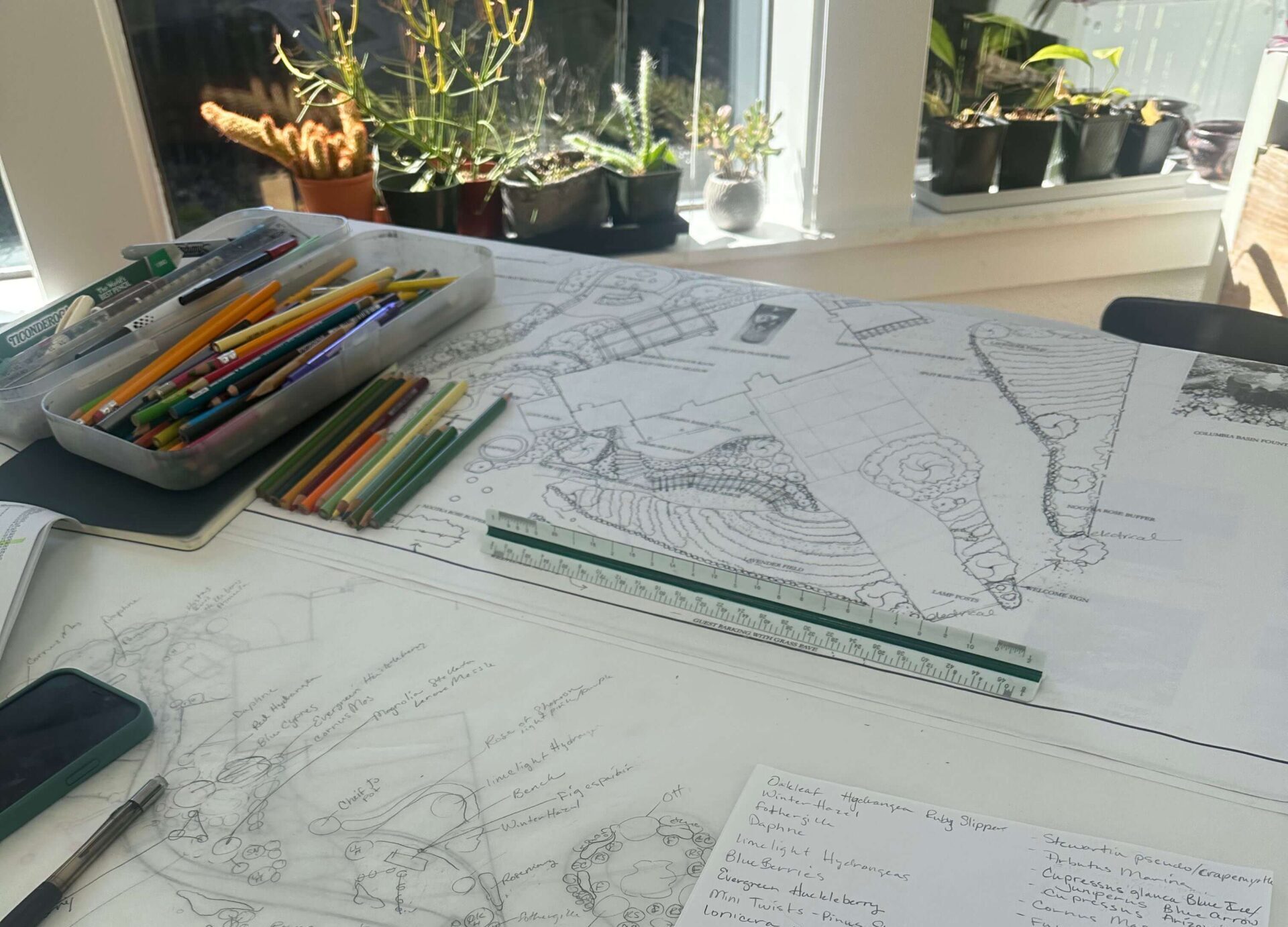
If you want to level up your garden, you need a map. Before you plant another thing, take measurements and document what’s there.
- Measure Your Space: Grab a tape measure and sketch out the general layout.
- Use Aerial Views: Google Earth or finding a way to find higher ground (like a second story window) can help you visualize the space from above.
- Inventory Your Plants: Make a list of everything growing and categorize it (trees, perennials, annuals, bulbs, etc.).
📌 Activity: Create a simple sketch of your garden, even if it’s just a rough sketch with basic shapes and notes. Seeing your space on paper will help you make better decisions.
Step 4: Gather Inspiration, But Stay Realistic
(Yes, Pinterest is useful, but no, you’re not recreating Versailles.)
Instead of copying an aesthetic, look for patterns in what you love.
- Do you like structured, formal gardens or wild, cottage-style plantings?
- Are you drawn to certain colors or plant types?
- Do you love overflowing, lush borders or more minimalist designs?
📌 Activity: Create a Pinterest board (or a real-life mood board) and review it after a week. Notice what elements keep repeating—those are your true preferences.
A garden isn’t just a collection of plants—it’s a composition. Great gardens have:
- Anchor Elements – Trees, shrubs, or perennials that provide year-round structure.
- Seasonal Interest – Plants that bloom or change color at different times.
- Ground Cover – Low-growing plants that suppress weeds and add texture.
- Paths & Hardscape – The bones of your garden, helping define movement and function.
📌 Activity: Pick one existing area and think about it in layers. What’s missing? Could you add a small tree for structure? More seasonal color?
Step 6: Test Different Layouts
(Work on paper first—your back will thank you.)
If your garden feels off, try redrawing it from scratch.
- Sketch out different layouts before making changes.
- Think about how people will move through the space.
- Experiment with at least three different configurations.
📌 Activity: Grab a big piece of paper and sketch three alternative versions of your garden. Try switching up pathways, plant placement, and focal points.
Step 7: Prioritize & Phase Your Changes
(Translation: Don’t try to do it all in one season.)
Instead of an overwhelming to-do list, break things into phases.
- What will make the biggest impact first? (Ex: Removing invasive plants, adding mulch, defining pathways.)
- What can wait until next season?
- What fits your current budget and time constraints?
📌 Activity: Make a multi-year plan for your garden. Start with the essentials (soil, structure) and work your way to the fun stuff.
Final Thoughts: Trust the Process
Your garden won’t magically transform overnight, and that’s okay. The best gardens evolve over time. By following this framework—observing, measuring, planning with intention, and phasing your changes—you’ll create a space that is beautiful, functional, and uniquely yours.